

Avoid Costly Mistakes: What Every Office Building Buyer Must Know
This office property due diligence checklist covers the process of verifying an office building’s income, leases, physical systems, and legal standing before your purchase becomes final. The short answer to what you must verify is this: the rent roll against real collected cash, the weighted average lease term (WALT) and expiry schedule behind that income, and the tenant improvement (TI) and leasing commission (LC) costs waiting at every rollover. You must also verify the rentable area you are paying for, the condition of the HVAC and elevator systems, and whether the building’s class still matches what its submarket wants. Generic commercial checklists stop at document collection; office value lives in the leases and the cost of keeping them, so office diligence has to go further — into the numbers.
This office property due diligence checklist follows the order an investor actually works in: PSA deadlines and protections, the first-week document request, leases read as income documents, tenant mix and rollover, cash and measurement verification, office systems, and title, zoning, accessibility, and environmental review. For the asset-agnostic master template that organises the whole transaction, use our commercial real estate due diligence checklist template alongside it; this article covers only what is different — and riskier — for office.
What Office Property Due Diligence Means (and How It Differs From Generic CRE Diligence)
Due diligence is the period between signing a purchase agreement and closing in which you confirm that what the seller represented — income, condition, legal compliance — is actually true, then proceed, renegotiate, extend, or walk away.
An office building is essentially a portfolio of lease contracts wrapped around expensive shared systems. When a lease expires, the space does not re-let the next week — it can sit empty for months, then demand a TI allowance and leasing commission before producing rent again. The building’s income therefore depends on the timing and cost of future expirations, a risk generic checklists rarely model. That is why the top-ranking checklists for this topic — written for buyer-occupiers or all-purpose commercial deals — contain no WALT calculation, no rollover reserve and no measurement verification.
Three principles keep it focused: verify income, not asking figures; price the rollover, because every near-term expiry carries a cash cost that belongs in today’s underwriting; and measure what you are buying, because rent is charged on rentable area.
The Office Checklist at a Glance
Office diligence runs in parallel workstreams; details follow below.
| Workstream | What you verify | Primary evidence | What failure looks like |
|---|---|---|---|
| Deal control | Deadlines, contingencies, extensions, termination rights | Executed PSA | Losing earnest money or objection rights |
| Documents | Leases, rent roll, financials, contracts, permits | Week-one seller deliverables | Diligence spent chasing paper |
| Lease economics | Rent, escalations, options, concessions, expiries | Lease abstracts + estoppels | Income expiring sooner than modelled |
| Rollover exposure | WALT, expiry schedule, TI/LC reserve | Rent roll + leasing assumptions | A year-two cash call wiping out returns |
| Cash verification | Billed vs collected rent, arrears, deposits | Bank statements, ledgers, tax filings | Paying for uncollected rent |
| Expense structure | Base years, expense stops, recoveries | Lease clauses + reconciliations | Unrecoverable expense leakage |
| Measurement | Rentable vs usable area, load factor | BOMA measurement report | Paying for nonexistent square feet |
| Physical systems | HVAC, elevators, roof, floor plates, parking | Property condition assessment | Capital surprises |
| Class and market | Class, obsolescence, conversion options | Broker evidence, submarket review | Owning the wrong product |
| Legal and compliance | Title, zoning, ADA, environmental | Title commitment, survey, Phase I | Liability discovered after closing |
Setting Deadlines and Deal Protections in the PSA
Your due diligence rights exist only because the PSA creates them, so the checklist starts at contract drafting. The diligence period is negotiated between buyer and seller and commonly ranges from 30 to 90 days. For an office building, push for a period that reflects the document volume — leases, estoppels, PCA, environmental, measurement — and calendar every deadline the day the contract is signed.
Four protections matter most. First, a document delivery obligation: the seller delivers the full package within a short, defined period after execution. A slow seller then cannot consume your inspection window. Second, an objection and cure mechanism: define how you notify defects. These include title problems, lease discrepancies, and deferred maintenance. Also define what follows — seller cure, price credit, or your right to terminate. Third, an extension right: a pre-agreed option to extend. It usually costs a fee or deposit hardening. It is cheap insurance when a Phase II test or an estoppel round runs long. Fourth, a clean termination right: until the period expires, you can walk away for any reason. You recover your earnest money, less agreed costs.
Order estoppels in the first week — lenders typically require them, and tenants respond on their own schedule — and negotiate any appraisal or survey overrun in the PSA.
The First-Week Document Request List (Office Edition)
Send the request list on day one and track delivery daily. For an office asset, require at minimum:
- Title and survey: current title commitment or policy, ALTA/NSPS survey, and any environmental or engineering reports in the seller’s possession.
- Leases: every lease with all amendments, guaranties, side letters, and correspondence about defaults or disputes — complete files, not summaries.
- Certified rent roll: signed by the seller, showing tenant, suite, area, rent, escalations, expiry dates, options, and deposits.
- Financial history: operating statements and tax bills for three years, current budget, capital expenditure history, and arrears ledgers.
- Service and vendor contracts: elevator, HVAC, janitorial, security, landscaping, and parking contracts, plus any contract that survives the sale or carries a termination fee.
- Compliance file: certificates of occupancy, permits for tenant build-outs, life-safety inspection records, and violation notices.
- Litigation and insurance: pending litigation or claims schedule, current policies, and loss history.
- Tenant files: estoppel contact details for each tenant, plus any tenant financials the seller holds for major occupiers.
Treat missing documents as a finding, not an inconvenience: every gap should close before your period expires or convert into a price discussion, a seller representation, or a reason to extend.
Reading Office Leases as Income Documents
Once the documents arrive, abstract every lease into standard fields so leases can be compared and stress-tested. For each tenancy, capture: tenant legal name and guarantor; suite and rentable area; base rent and escalations; start, expiry, and termination rights; renewal and expansion options and their rents; TI, free rent, and other concessions granted — and whether any remain unpaid; who pays which operating expenses (covered in a later section); permitted use and exclusivity; assignment and subletting rights; and any right of first refusal or purchase option.
Read for the clauses that quietly change value. A termination option exercisable next year makes that tenant’s “five-year lease” worth far less; below-market renewal options cap your upside; above-market rents with a weak-credit tenant inflate the rent roll without dependable income. Unpaid TI or free-rent obligations transfer to you at closing unless the PSA allocates them to the seller — find them now and put them in the closing statement. Flag any tenant in default, in arrears, or signalling a move, and check guaranties for the tenants carrying the largest income share.
Finally, test the leases against the estoppels as they return: where an estoppel contradicts the lease file or the rent roll, the discrepancy — not the seller’s explanation — is what you underwrite.
Tenant Mix, WALT and the Lease-Expiry Schedule
Two buildings with identical rent rolls can carry completely different risk; the difference is time — when leases expire, and how much space expires with them. The standard summary measure is the weighted average lease term (WALT) — average remaining term, weighted by leased area:
WALT = Σ (leased SF × remaining term) ÷ total leased SF
Calculate it from the rent roll using remaining terms in months. Exclude vacant space, and exclude unexercised renewal options — an option is the tenant’s right, not your income, so counting it flatters the number. Read WALT alongside mark-to-market: a long WALT at below-market rents locks in underperformance, while a short WALT at above-market rents warns that income will reprice downward at expiry.
Worked example — a 100,000 SF building with three tenants:
| Tenant | Leased SF | Remaining term (months) | SF × months |
|---|---|---|---|
| A | 50,000 | 96 | 4,800,000 |
| B | 30,000 | 84 | 2,520,000 |
| C | 20,000 | 60 | 1,200,000 |
| Total | 100,000 | — | 8,520,000 |
WALT = 8,520,000 ÷ 100,000 = 85.2 months, or about 7.1 years. WALT alone hides clustering, so build the lease-expiry schedule beside it: square footage and rent expiring in each of the next five to ten years. If 60% of the building expires in a single year, the 7.1-year average is masking a rollover cliff. Also weigh tenant concentration: if Tenant A alone is half the building and half the income, its credit and space needs deserve their diligence. Concentration plus a near expiry is the classic office value trap.

TI, Leasing Commissions, Downtime: Reserving for Rollover
The most common underwriting error in office purchases treats today’s net operating income (NOI) as if it repeats untouched. It does not, because leases expire. Every expiry triggers some combination of four cash costs. First, a tenant improvement allowance to refit the space. Second, leasing commissions to the brokers who secure the deal. Third, free rent at the start of the new term. Fourth, downtime — months of zero rent while space is marketed and built out. None of these appear in the seller’s operating statement, because the seller has not paid them yet. You will.
Handle this by building a rollover reserve into your analysis. For each expiry inside your hold period, estimate the outcome and attach a cost to it. Renewal is usually cheaper than a new lease. Then convert the total into an annual reserve deducted below NOI. Compare properties on income after the cost of keeping it. An illustrative example: 40,000 SF rolls over five years. Your underwriting assumes, hypothetically, $40 per SF of combined TI, commissions, and downtime cost. The reserve is $1.6 million over five years, or $320,000 per year against NOI. Those figures are assumptions to replace with quotes and broker evidence for your market — not market data. The discipline is the point: reserve rollover before you justify any office price.
Verify the inputs while you still can: confirm which TI and commission obligations from existing leases remain unpaid — the seller’s unless the PSA says otherwise, credited at closing — and review recent leasing deals to see what concessions cost. A building priced off unreserved NOI is priced off income you will not keep.
Verifying the Rent Roll Against Collected Cash
The rent roll is a claim; diligence turns it into evidence. Reconcile the certified rent roll line by line against the lease abstracts — area, rent, escalations, expiry, options — then reconcile it against money: bank statements or a collections ledger, the arrears report, and the seller’s tax filings. Billed and collected rent diverge through quiet deferrals, side agreements, and partial payments. Pay for collected income only.
Check the details that inflate paper income: confirm security deposits held match the leases (you will owe them back), identify rent that is prepaid, forgiven, or stepping down, and review the trailing twelve months rather than one good quarter.
The output is a verified collections figure. With it, our guide to operating cash flow for a commercial property shows how to move from NOI to after-debt-service cash flow; use that restated figure — not the broker’s pro forma — as the income you are actually buying.
Gross Leases, Base Years and Expense Stops
Office leases allocate operating expenses — taxes, insurance, cleaning, utilities, maintenance — in ways that decide how much of every increase you absorb. The dominant structure is the gross (full-service) lease with a base year and expense stop: rent includes expenses at a starting level, and the tenant reimburses its share of increases above that base. Some spaces sit on modified or net structures, so abstract every lease’s expense clause.
Your targets are the leaks. Establish each tenant’s base year or stop and confirm it matches the lease — a misstated base year quietly transfers years of expense growth to you. Review how the seller has billed recoveries in prior years, because sloppy practice means under-recovery you inherit and cannot retroactively fix. Check which expenses the leases exclude (capital items are commonly disputed), whether reimbursements are capped, and whether vacant space was “grossed up” correctly. Get the clauses, recompute one or two tenants by hand, and confirm the method before you rely on the recovery income.
BOMA Measurement: Rentable vs Usable Area and the Load Factor
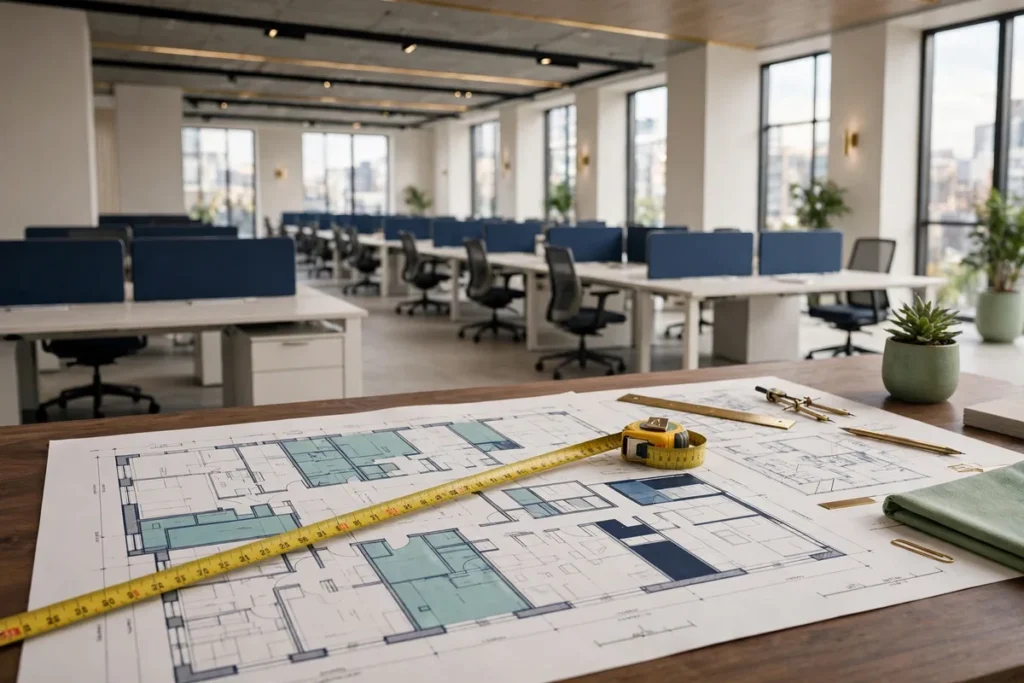
Office rent is charged on rentable area, but tenants work in usable area — and the gap is priced into every lease you are buying. Usable area is the space inside a tenant’s suite. Rentable area adds the tenant’s share of common areas — lobbies, corridors, washrooms, mechanical rooms — allocated under the ANSI/BOMA Z65.1 standard. The relationship is the load factor: rentable area ÷ usable area. A load factor of 1.15 means tenants pay rent on 15% more space than they physically occupy.
Why this is a diligence item: your price rests on income calculated from rentable areas in the rent roll. If those areas were measured loosely or under an outdated standard, the income rests on square feet that may not survive professional remeasurement, surfacing when a major tenant remeasures at renewal. Commission an independent BOMA-standard measurement during diligence for the largest suites and common areas, and compare it against the rent roll. Material differences are price conversations for before closing, not after.
Measurement also feeds tenant economics: two buildings quoting the same rent per rentable foot deliver different real costs when their load factors differ.
Inspecting Office Systems: HVAC, Elevators, Floor Plates and Parking
A property condition assessment (PCA) is the backbone of physical diligence; scope it to the systems that drive tenant satisfaction and capital budgets.
HVAC comes first: central systems are among the most expensive components in an office building, and tenants feel failures immediately. Establish the age, type, and remaining life of chillers, boilers, air handlers, and controls; whether zoning lets suites or floors be conditioned independently; and the maintenance record. Elevators are second: confirm number, age, and condition of cars, modernisation history, inspection certificates, and service-contract terms — modernisation is a major capital event, and a building approaching one needs it priced into your offer. Continue through roof and envelope, life-safety systems (fire alarm, sprinklers, emergency power, inspection records), and electrical capacity.
Then evaluate the space itself. Floor-plate efficiency — how much of each floor is usable, column-free, and divisible — decides which tenants the building can serve; deep or awkwardly columned plates narrow the pool. Check parking: count spaces per rentable area against zoning requirements and class expectations — a shortfall is nearly impossible to fix later. Close by matching the PCA’s capital-needs schedule against the seller’s capex history: deferred systems become your first budget.

Building Class, Obsolescence and Conversion Risk
Office buildings are grouped as Class A, Class B, or Class C under BOMA’s metropolitan base definitions — broadly: the most prestigious, well-located, professionally managed buildings (A); buildings competing for a wide range of users at lower rents (B); and older buildings competing on price (C). Treat the labels with care: classification is subjective and relative to the local market, and BOMA itself does not recommend publishing ratings for individual properties. A “Class A” claim in a broker package is marketing until tested against the buildings it actually competes with.
The diligence question is not the label but the trajectory. A Class B building in a strong location with efficient floor plates and modern systems can be a sound purchase; the same label on a building with obsolete systems, deep lightless floor plates, low ceilings, and amenities tenants no longer accept is functional obsolescence — it cannot be economically upgraded to what its market wants. Have your broker test achievable rents against real evidence — our method guide to commercial property comparables shows how to build that comparison.
Where obsolescence is real, conversion enters the analysis. Office-to-residential or office-to-lab conversion is sometimes the exit — or the value-add thesis itself — but feasibility turns on floor-plate depth and light, plumbing distribution, zoning, and local incentives. A building that fails those tests earns no conversion premium. For contrast, the sibling process in our retail property due diligence checklist turns on tenant interdependence; office’s terminal risk is a building the tenant market has moved past. Underwrite the building you can verify, price any conversion as speculation, and never pay Class A money for a label.
Title, Zoning, ADA and Environmental Review for Office Assets
Title and survey. Review the title commitment for liens, easements, and restrictions that limit office use or future redevelopment, and match an ALTA/NSPS survey against the site — footprint, parking, access, encroachments.
Zoning and occupancy. Confirm the zoning permits office use as of right, that certificates of occupancy exist for the building and for tenant build-outs, and that parking satisfies the zoning minimum. If any part operates under a variance or nonconforming status, learn what happens to that status on sale or after a casualty.
Accessibility. Office buildings are “commercial facilities” under Title III of the Americans with Disabilities Act. New construction and alterations must comply with the 2010 ADA Standards, and barriers in existing facilities can become your problem when you remodel — or sooner, on a complaint. Have a PCA or a specialist flag common barriers (entrances, routes, elevators, restrooms) and budget corrections.
Environmental. Commission a Phase I Environmental Site Assessment performed to ASTM E1527-21. It satisfies the EPA’s All Appropriate Inquiries rule (40 CFR Part 312). That process preserves a buyer’s landowner liability protections under CERCLA. Timing matters. Conduct or update the assessment within one year before acquisition. Also refresh certain components within 180 days: interviews, records review, site inspection, and lien searches. Office-specific concerns include historical dry-cleaning or printing uses, underground tanks, asbestos, and PCBs in older electrical equipment. If the Phase I identifies recognised environmental conditions, scope a Phase II inside your diligence period. Extend the period if needed, rather than inheriting an unquantified liability.
Buying a warehouse or logistics asset instead? Use the companion industrial property due diligence checklist.
People Also Ask
It is whatever the purchase and sale agreement says: the period is negotiated and commonly ranges from 30 to 90 days. What matters is that it covers your slowest workstreams — estoppels, PCA, environmental, measurement — with an extension right negotiated in advance.
It includes the standard commercial items — title, survey, zoning, environmental, seller documents — plus what generic checklists omit: lease abstracts, WALT and lease-expiry analysis, TI/LC and downtime reserves, rent-roll verification against collected cash, base-year and expense-stop review, BOMA measurement, and inspection of HVAC, elevators, floor plates, and parking.
An estoppel certificate is a tenant’s signed confirmation of its lease’s key facts — rent, term, expiry, options, deposits, and whether either party is in default. Buyers and lenders rely on it because the tenant is afterwards generally prevented from claiming different terms. Compare each estoppel against the lease file and rent roll.
A Phase I ESA is a standardised investigation of a property’s environmental condition — records review, site inspection, and interviews. Performed under ASTM E1527-21 as part of the EPA’s All Appropriate Inquiries process, it preserves your landowner liability protections under CERCLA if contamination is later found. If it identifies recognised environmental conditions, a Phase II tests soil or groundwater to quantify the problem.
It takes as long as the negotiated diligence period — commonly 30 to 90 days. For an office building, the critical path runs through estoppels, the PCA, and environmental reporting.
Key Takeaways
- Office due diligence verifies income and its durability, not just documents: abstract every lease, reconcile the rent roll to collected cash, and confirm facts with estoppels.
- WALT and the expiry schedule are the core office risk measures. Weight remaining terms by leased area, exclude unexercised options, and watch for rollover clustering an average can hide — the worked example’s 85.2 months (~7.1 years) is only reassuring alongside its schedule.
- Reserve for rollover before you price. TI allowances, leasing commissions, free rent, and downtime are real cash costs that sit below the seller’s NOI — a price justified on unreserved income is justified on income you will not keep.
- Measure what you are buying. Rent is charged on BOMA rentable area; verify it independently — you are paying for income calculated from those square feet.
- Inspect the office systems — HVAC, elevators, floor plates, parking — and match the PCA’s capital schedule against the price while you hold diligence rights.
- Test the class label. BOMA classes are market-relative and subjective; obsolescence and conversion feasibility, not the broker’s letter grade, decide what the building can earn.
- Close the legal loop: title and survey, zoning and occupancy, ADA exposure, and a Phase I ESA within its one-year/180-day currency windows.
- If findings break your pricing and the seller will not adjust, use the termination right your PSA preserved. Next step: open the master template, set your PSA deadlines, and send the first-week document request on day one.
Disclaimer: This article is for educational and informational purposes only and does not constitute legal, tax, accounting, or financial advice. Laws, regulations, and standards vary by state, locality, and individual circumstances, and they change over time. Consult a qualified professional — such as a real estate attorney, CPA, or licensed inspector — about your specific transaction before making a purchase decision.
