

What Is Rental Payable in Accounting?
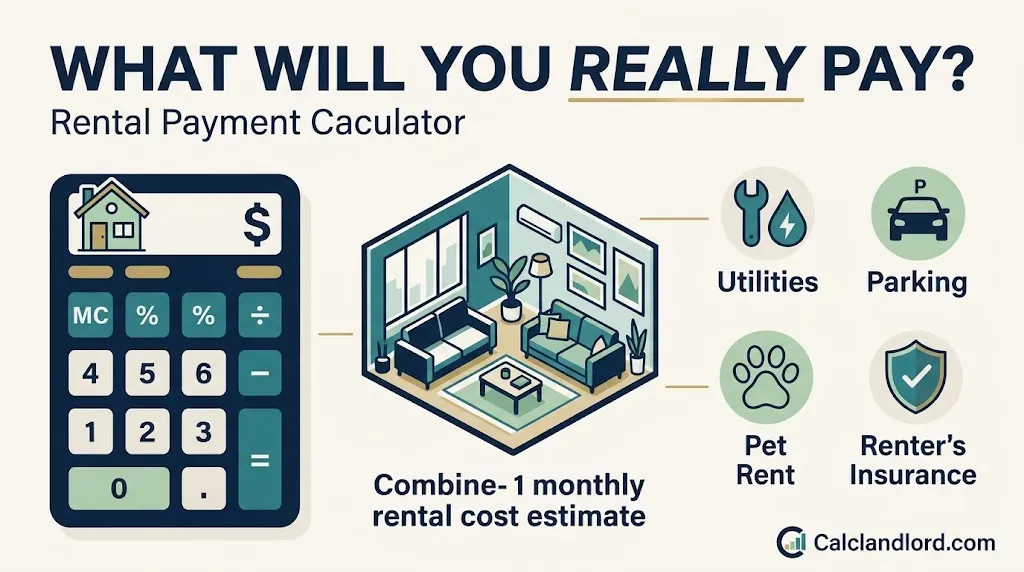
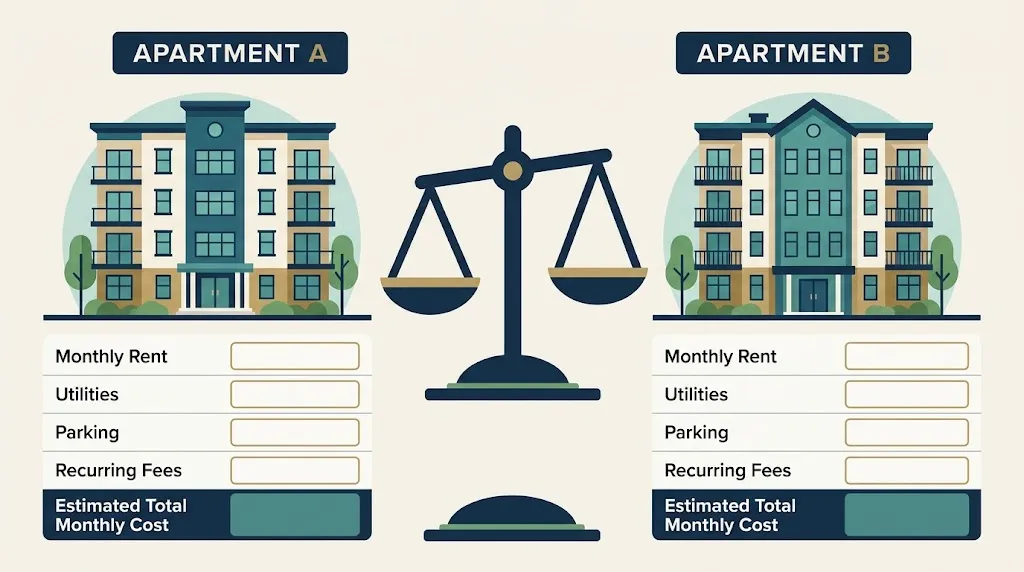
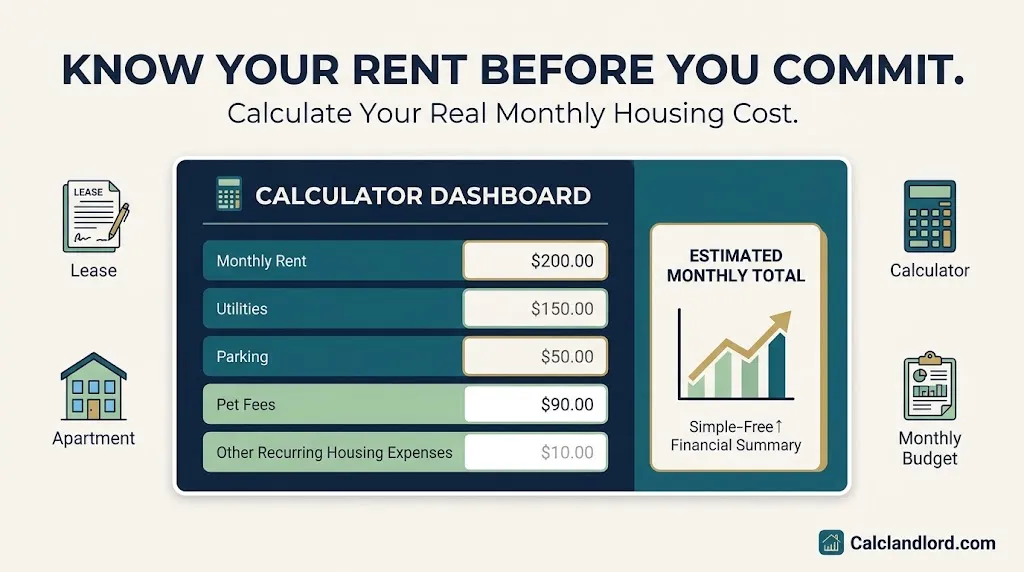
Rent is rarely the only number you need to budget for. Depending on your lease, your monthly housing cost may also include utilities, parking, pet rent, renter’s insurance, or other recurring fees. A rental payment calculator helps you estimate the amount you may need to pay each month before you commit to a property. Enter your rent and any applicable extra costs to see a clearer estimate, compare options, and check whether the total fits your budget. Remember, your actual payment depends on your lease terms, local charges, and any fees your landlord discloses. Use the estimate before you sign.
Rental payable, more commonly called rent payable, is the amount of rent a business or tenant owes for using a property but has not yet paid.
Under accrual accounting, rent expense is recognized in the period in which the property is used, even if payment occurs later. When the expense has been incurred but remains unpaid, the business records a corresponding liability.
For example, a property management company may rent office space for $3,000 per month. If the company has used the office during October but has not paid the rent by October 31, it may need to report $3,000 in rent payable at that date, assuming no prior payment or other adjustment.
Rent payable is normally reported under current liabilities when it is expected to be settled in the short term. The exact presentation depends on the nature and timing of the obligation.
What Does Rental Payable Mean for Landlords?
For landlords, the term requires some care because the accounting treatment differs depending on which side of the lease they occupy.
A landlord renting an office for their own business may record rent payable to the building owner.
However, a landlord who owns a rental property and is waiting for a tenant to pay rent generally records rent receivable when the rent has been earned but remains unpaid under the applicable accounting method.
For example:
- A landlord owes $1,800 to rent an office for their property management business. The unpaid amount may be rent payable.
- A tenant owes that landlord $1,800 for occupying a rental apartment. The unpaid amount may be rent receivable on the landlord’s books.
Understanding the difference prevents landlords from confusing money they owe with money tenants owe them.
How Does Rent Payable Work?
Rent payable arises when a rent expense has been incurred but has not yet been settled.
Under accrual accounting, the expense and liability are recorded before the cash payment occurs. When the business eventually pays the landlord, the liability is reduced.
There are generally two stages.
Stage 1: Record rent expense and the unpaid liability.
The business recognizes the cost of using the property and records the amount owed.
Stage 2: Record the payment.
When the rent is paid, the business removes the outstanding liability and reduces its cash balance.
According to AccountingTools’ explanation of accrued rent liability, the typical entries debit rent expense and credit the accrued rent liability, followed by a debit to the liability and a credit to cash when payment is made. 【turn609001view2】
Is Rent Payable an Asset, Liability, or Expense?
Rent payable is a liability, not an asset or an expense.
However, rent expense and rent payable are closely connected because recording an unpaid rent expense generally increases both expenses and liabilities.
| Accounting item | Classification | What it represents |
| Rent expense | Expense | The cost of using rented property |
| Rent payable | Liability | Rent owed but not yet paid |
| Rent receivable | Asset | Rent earned by a landlord but not yet collected |
| Prepaid rent | Asset for the tenant | Rent paid in advance for future periods |
| Unearned rental income | Liability for the landlord | Rent received before it has been earned |
These accounts serve different purposes and should not be treated as interchangeable.
For example, a business that pays $12,000 in advance for four months of office rent may initially record prepaid rent as an asset. It then recognizes the appropriate rent expense as each month passes.
By contrast, a business that has used the property but has not paid for that period may have rent payable.
Rent Payable Journal Entry: Step-by-Step Examples
Journal entries record financial transactions using debit and credit accounts. The appropriate entry depends on whether rent has been incurred, paid in advance, or settled after becoming due.
Example 1: Recording Unpaid Rent
Suppose a business rents a commercial office for $2,400 per month. March rent relates to March occupancy, but the agreement allows payment on April 5.
Assume the business uses accrual accounting and has not paid the March rent by March 31.
The journal entry on March 31 is:
| Account | Debit | Credit |
| Rent Expense | $2,400 | — |
| Rent Payable | — | $2,400 |
| Total | $2,400 | $2,400 |
Why is this entry recorded?
The debit recognizes the expense for March. The credit records the outstanding obligation to the landlord.
The entry does not mean the business has paid $2,400. It means the business has incurred the cost and still owes the money.
Example 2: Paying the Outstanding Rent
On April 5, the business pays the $2,400 owed for March.
The journal entry is:
| Account | Debit | Credit |
| Rent Payable | $2,400 | — |
| Cash or Bank | — | $2,400 |
| Total | $2,400 | $2,400 |
The debit reduces the outstanding liability, while the credit reduces cash.
The business should not record the same $2,400 as a new rent expense in April if it already recognized that expense in March.
Example 3: Recording Rent Payable for Multiple Months
Consider a small property management company that pays $3,000 per month for office space.
Its records show that September, October, and November rent remain unpaid at November 30.
Assuming all three months’ rent has been incurred and no amounts have been previously recorded or paid, the calculation is:
\[ \text{Rent payable} = 3 \times \$3,000 = \$9,000 \]
The business would record:
| Account | Debit | Credit |
| Rent Expense | $9,000 | — |
| Rent Payable | — | $9,000 |
| Total | $9,000 | $9,000 |
This example assumes that each month’s expense is recognized in the same accounting period shown and that all three months remain unpaid.
Recording rent this way helps prevent expenses from being understated and liabilities from being omitted from financial statements.
How to Calculate Rent Payable
The basic calculation depends on the unpaid balance at the beginning of the period, any rent liabilities added during the period, and any payments or adjustments.
A useful reconciliation formula is:
\[ \begin{aligned} \text{Ending rent payable} ={}& \text{Beginning balance}\\ &+ \text{Rent liabilities added}\\ &- \text{Payments and reductions} \end{aligned} \]
For example, suppose a business begins the month with $1,000 in rent payable. During the month, it incurs another $2,400 in rent expense and pays $1,000 toward its outstanding balance.
Its ending rent payable is:
\[ \$1,000 + \$2,400 – \$1,000 = \$2,400 \]
The ending liability is $2,400.
This calculation assumes the new rent expense has not been included in the beginning balance and that there are no other adjustments, credits, or reclassifications.
For landlords managing their own rental portfolios, tracking rental expenses alongside rental income can make property cash flow easier to understand. A useful next step is to compare unpaid operating costs against collected rent rather than relying on rental income alone.
Where Does Rent Payable Appear on the Balance Sheet?
Rent payable usually appears in the liabilities section of the tenant’s balance sheet.
It represents an amount the business must pay to the landlord. If the obligation is due in the normal short-term operating cycle, it will generally be classified as a current liability.
Consider this simplified balance sheet extract for a business with $2,400 in outstanding rent:
| Balance sheet item | Amount |
| Cash | $15,000 |
| Other assets | $35,000 |
| Total assets | $50,000 |
| Rent payable | $2,400 |
| Other liabilities | $7,600 |
| Total liabilities | $10,000 |
| Equity | $40,000 |
The balance sheet balances because total assets equal total liabilities plus equity:
\[ \$50,000 = \$10,000 + \$40,000 \]
The rent payable balance also helps readers understand the company’s outstanding obligations.
The exact account name and presentation depend on the entity’s chart of accounts and applicable accounting requirements. For example, an organization may include a small accrued rent balance in a broader accrued-liabilities account rather than displaying a separate line. 【turn609001view2】
Does Rent Payable Affect the Income Statement?
Yes, but the effects occur through related accounts.
When unpaid rent is first recognized under accrual accounting, the business records rent expense on the income statement and rent payable on the balance sheet.
When the business later pays the amount already accrued, it reduces rent payable and cash. It does not ordinarily record the same expense a second time.
This distinction matters when preparing monthly financial statements because the timing of a cash payment does not necessarily determine when the expense belongs in the accounts.
Rent Payable vs. Rent Receivable
Rent payable and rent receivable describe opposite sides of a rental transaction.
| Feature | Rent payable | Rent receivable |
| Recorded by | Tenant or business that owes rent | Landlord that has earned rent but has not collected it |
| Account type | Liability | Asset |
| Represents | Money owed to the landlord | Money owed by the tenant |
| Typical entry | Debit rent expense; credit rent payable | Debit rent receivable; credit rental income |
| When payment occurs | Liability decreases | Receivable decreases |
For example, if a tenant owes $1,800 for a rental period and the landlord expects to collect it, the tenant and landlord may record opposite sides of the transaction under accrual accounting.
The tenant recognizes an expense and a liability, while the landlord recognizes rental income and a receivable, subject to the relevant accounting requirements.
AccountingCoach provides further examples of the distinction between these two accounts. 【turn609001view0】
Rent Payable vs. Accrued Rent
The terms rent payable and accrued rent are often used in closely related ways, particularly when discussing rent expense that has been incurred but remains unpaid.
Accrued rent emphasizes the expense that has accumulated during a period before payment. Rent payable emphasizes the outstanding obligation recorded as a liability.
Suppose a business occupies rented office space throughout December, but its rental agreement requires payment in January.
Under accrual accounting, the business may recognize December rent expense and an accrued rent liability at December 31.
When the payment is made in January, the liability is reduced.
AccountingCoach explains that accrued rent concerns rent for a past period that has not yet been paid by the tenant or received by the landlord. 【turn609001view1】
The precise account name used in the general ledger can vary from one organization to another.
Rent Payable vs. Accounts Payable
Accounts payable is a broader accounting category covering amounts an organization owes to suppliers and other parties for goods or services received.
Rent payable identifies a specific type of obligation: unpaid rent.
A business may maintain rent payable as a separate general-ledger account or include it within an appropriate accounts-payable or accrued-liabilities structure, depending on its accounting policies and reporting needs.
For example, a property management business may owe:
| Outstanding obligation | Amount |
| Office rent | $2,400 |
| Maintenance contractor | $850 |
| Cleaning service | $250 |
| Total outstanding obligations | $3,500 |
The business may track these items in separate accounts or subaccounts even if its financial statements combine some balances into a broader liability category.
The important point is that each obligation should be recorded accurately, classified consistently, and reconciled to supporting documents.
Common Mistakes When Recording Rent Payable
Even simple rental transactions can create bookkeeping problems if expenses and payments are recorded in the wrong period.
Recording Rent Expense Only When Cash Is Paid
Under accrual accounting, rent expense is generally recorded in the period to which it relates, even when payment happens later.
Waiting until cash leaves the bank can understate expenses and liabilities at month-end.
Cash-basis bookkeeping follows different timing rules, so the appropriate treatment depends on the accounting method and purpose of the records.
Recording the Same Rent Expense Twice
A common mistake occurs when a business records rent expense when the liability arises and then records the same expense again when payment is made.
If the rent was already accrued, the payment should generally debit rent payable and credit cash. Recording another expense would overstate the cost.
Confusing Rent Payable With Rent Receivable
Rent payable represents an amount the business owes. Rent receivable represents an amount a landlord is entitled to collect.
Using the wrong account can distort both the asset and liability balances.
Ignoring Unpaid Rent at Month-End
Outstanding rent should be reviewed at each reporting date.
A business that fails to recognize expenses already incurred may report inaccurate liabilities and expenses. Reviewing rental agreements, invoices, due dates, and payment records can help identify missing entries.
Treating Every Lease as a Simple Rent-Expense Arrangement
Some business leases may be subject to specialized lease-accounting requirements. Under U.S. GAAP, applicable lessees generally need to consider the lease-accounting model, including right-of-use assets and lease liabilities, rather than automatically assuming every rental payment is handled through a simple rent-payable account.
Short-term lease exemptions and other applicable provisions may affect the treatment. Businesses with material leases should confirm the appropriate accounting with a qualified accountant.
Best Practices for Managing Rental Payable
Accurate rent accounting starts with clear records and consistent procedures.
Maintain a rent schedule. Record the property or premises, monthly rent, due date, payment date, outstanding balance, and relevant agreement terms.
Reconcile balances regularly. Compare the general ledger with invoices, lease agreements, bank records, and payment confirmations.
Separate expenses from payments. Keep track of when rent is incurred and when it is actually paid. This is particularly important when preparing monthly or year-end statements.
Review outstanding balances. Investigate overdue amounts, duplicate entries, credits, and disputed charges before closing the accounting period.
Use consistent account names. Whether the account is called rent payable, accrued rent, or another appropriate label, apply the organization’s accounting policy consistently.
Seek professional guidance for complicated leases. Commercial properties, multiple premises, unusual payment terms, and leases subject to specialized accounting rules may require professional review.
For landlords, good financial records also support broader property management decisions. Comparing operating expenses with rental income, for instance, helps clarify whether a property is generating positive cash flow.
People Also Ask About Rental Payable
Rental payable is rent that a tenant or business owes but has not yet paid. Under accrual accounting, it is generally recorded as a liability when the rental expense has been incurred.
When an unpaid rent expense is first recorded under accrual accounting, rent payable is credited and rent expense is debited. When the outstanding rent is paid, rent payable is debited to reduce the liability.
Rent payable is generally a current liability when the amount is expected to be settled in the short term. Its classification depends on the payment obligation and applicable accounting requirements.
What is the journal entry for rent payable?
When $2,400 in rent has been incurred but remains unpaid, the entry is:
| Account | Debit | Credit |
| Rent Expense | $2,400 | — |
| Rent Payable | — | $2,400 |
When the amount is paid, debit rent payable for $2,400 and credit cash for $2,400.
Rent expense is the cost of using a rented property during an accounting period. So Rent payable is the amount still owed for rent that has been incurred but not paid.
Rent expense affects the income statement, while rent payable is recorded as a liability on the balance sheet.
Rent payable represents rent owed for a period that has already been incurred. Prepaid rent represents rent paid in advance for a future period and is generally recorded as an asset by the tenant until the related expense is recognized.
Yes. A landlord can owe rent when renting an office, storage unit, or other property for business use. However, when a landlord’s tenant owes rent for a property the landlord owns, the landlord generally considers rent receivable rather than rent payable.
The terms are closely related but are not always interchangeable in every context. Unpaid rent is a plain-language description of money still owed. Rent payable is an accounting account used to record the relevant liability when the applicable accounting method calls for it.
Conclusion
Rent payable is an important accounting concept because it records rent obligations that remain unpaid. Under accrual accounting, recognizing rent expense and the related liability in the appropriate period helps businesses produce more accurate financial statements.
The key distinction is straightforward: rent expense records the cost of occupying a property, rent payable records the unpaid obligation, and rent receivable records rent owed to a landlord.
For landlords and property managers, understanding these accounts makes it easier to distinguish outstanding expenses from rental income, reconcile transactions, and monitor property finances. Consistent records, timely reconciliations, and appropriate accounting advice can help prevent errors and support better financial decisions.
This article provides general educational information. Accounting treatment may vary according to the accounting method, lease terms, applicable reporting standards, and individual circumstances.
